Koh Tao
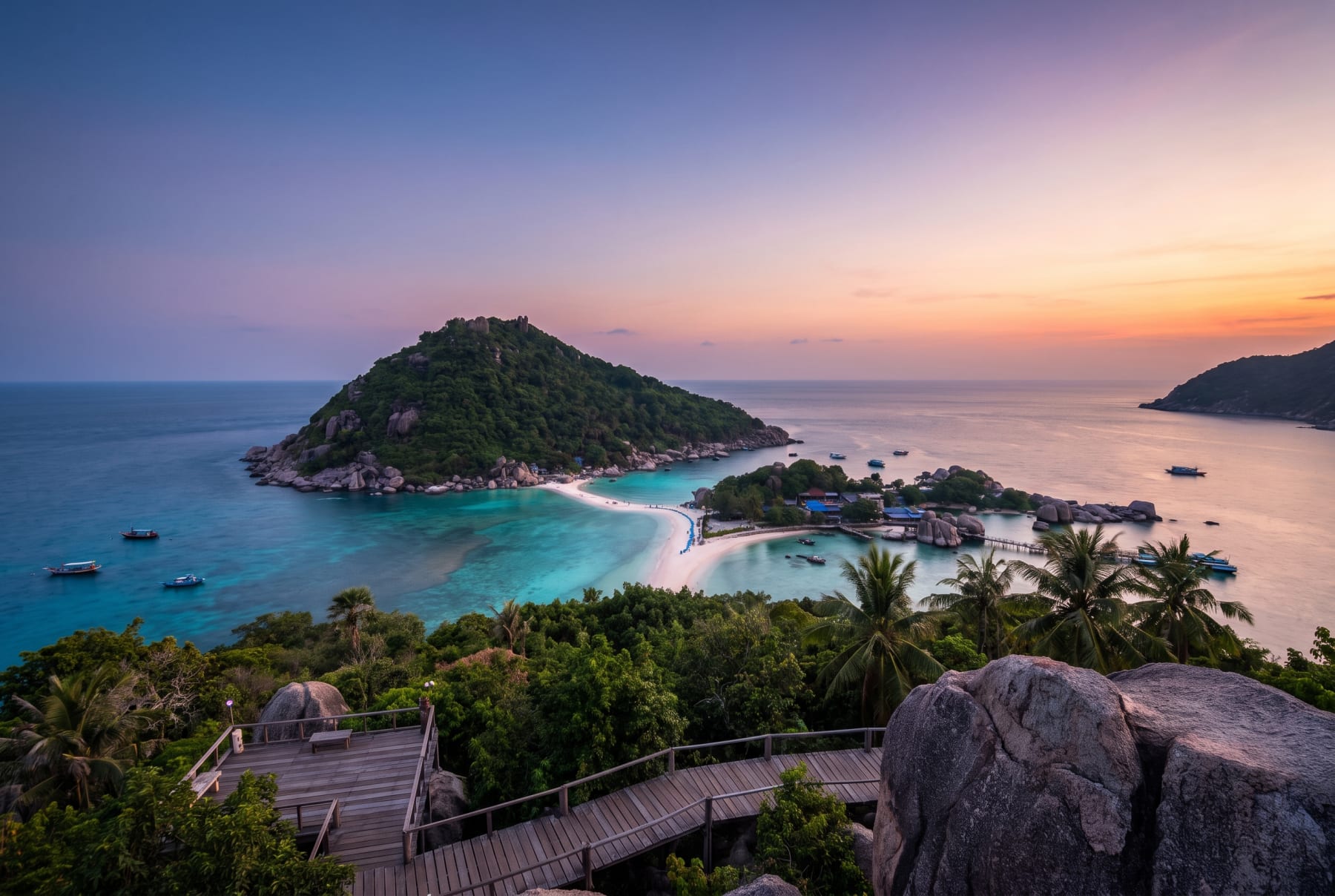
Koh Tao is Thailand's smallest major tourist island and the world's most popular dive certification destination. Beyond the dive schools, it supports a resident community of dive industry workers, wellness practitioners, and an increasing number of remote workers drawn by its compact size, affordable living costs, and genuine island atmosphere.
Who Lives Long-Stay On Koh Tao
Koh Tao's resident expat population is dominated by the dive industry — Divemaster and Instructor instructors and instructors at PADI and SSI dive schools. This makes Non-B + work permit paperwork a well-established routine on the island, though all Immigration visits require travelling to Koh Samui.
A growing second group: DTV holders and remote workers who want a smaller, less commercial island than Koh Phangan or Koh Samui. The island is only 21 square km — everything is reachable by motorbike in under 20 minutes.
Dive Industry Work Permits On Koh Tao
For dive instructors and divemasters employed by Thai-registered dive schools: the standard Non-B + work permit route applies. The dive school handles the work permit application through the Department of Employment (via Koh Samui or Surat Thani). The employer-employee relationship and 4:1 Thai-to-foreign ratio applies to dive operations as it does to any Thai company. Visa Centre assists dive school operators and instructors with the permit cycle.
Best Areas
Sairee Beach (west coast): the main expat and tourist area. Beachfront bars, restaurants, the highest concentration of dive schools. Long beach, good sunset. 1BR bungalow/studio: 6,000–14,000 THB/month.
Mae Haad (town/pier): the ferry landing point and the island's commercial centre. Supermarkets (7-Eleven, small supermarkets), banks, ATMs. Less scenic but more practical. 1BR: 6,000–12,000 THB/month.
Chalok Ban Kao (south): quieter bay, shallower beach. Less crowded. Popular with longer-term residents wanting distance from the Sairee party zone. 1BR: 6,000–12,000 THB/month.
Immigration
No Immigration office on Koh Tao. All visa extensions and 90-day reports require a visit to Koh Samui Immigration (Na Thon). Ferry: Mae Haad to Koh Samui approximately 1.5–2 hours. Budget a full day for Immigration visits. Some 90-day reports can be filed online or by post.
Healthcare
One government hospital (Koh Tao Hospital, Chalok Baan Kao area) covering emergencies. Very limited specialist capability — Koh Samui or Bangkok is the referral standard for anything beyond urgent care. Dive accident treatment (hyperbaric chamber): the island has a recompression chamber (Thai Hyperbaric Services) — important for dive industry workers.
Transport
The island is small enough for a motorbike (2,500–4,000 THB/month) to be the only vehicle needed. No cars (limited by the island's policy). Long-tail boats for beach-to-beach travel.
Access: ferry from Chumphon (2 hours, THB 600) or Koh Samui (1.5 hours). Night ferry from Bangkok bus terminal via Chumphon: popular for budget travel.
Cost Of Living (August 2026 Estimates)
1BR bungalow (Sairee/Mae Haad/Chalok Ban Kao): 12,000–30,000 THB/month Groceries: 8,000–18,000 THB/month (imported goods push toward the higher end) Local meal: 50–100 THB; Western dining: 250–500 THB/person Total monthly budget, comfortable single: around 49,000 THB
General guidance, drawn from nomads.com and current island rental listings (2026 data). No dated, defensible couple-specific figure is currently available for Koh Tao — ask us for a current comparison.
Visa services we handle
Check stays in Koh Tao
Immigration office
Koh Tao immigration office
Confirm the local immigration office, hours and required documents with the Thailand Immigration Bureau before visiting.
Need visa help in Koh Tao?
Check eligibilityVisa rules, office locations and hours change — our specialists verify the current details with the Thailand Immigration Bureau for your case.