Sukhothai
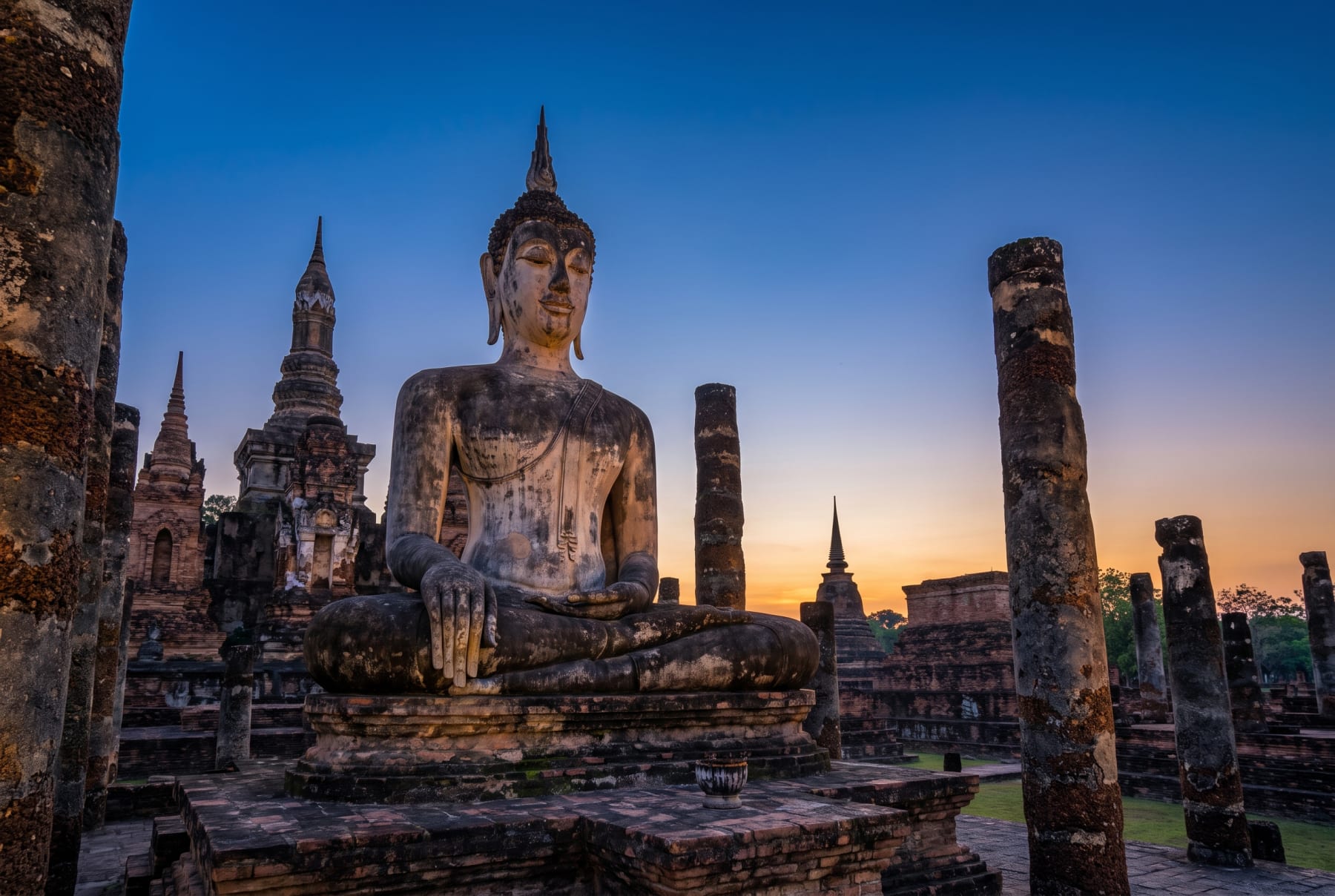
Sukhothai was the first capital of the Thai kingdom, and its ancient temples and ruins are among Southeast Asia's most significant UNESCO World Heritage Sites. Today it is a quiet provincial town that attracts a very small but committed expat community drawn by history, culture, extremely low cost of living, and the bicycle-friendly atmosphere of the 13th-century historic park.
Who Lives In Sukhothai Long-Term
Sukhothai's foreign resident population is very small — one of the smaller on this list. Those who choose it are typically: retirees who made an unconventional choice and found exactly the slow pace and cultural depth they were looking for; cultural and heritage enthusiasts, often with some connection to Thai art or archaeology; and individuals in relationships with Thai partners from the region.
There is no digital nomad scene, no coworking infrastructure, and the town closes early. The old city's atmosphere — cycling past lotus-filled ponds and illuminated temple spires at sunset — is genuinely unlike anywhere else in Thailand.
The Historic Park
Sukhothai Historical Park covers approximately 70 square km and contains the ruins of the ancient capital. Entry for foreigners: 100 THB per day (reduced for monthly passes and researchers). Bicycle rental within the park: 30–50 THB/day. The park is best seen by bicycle — it is flat, well-maintained, and the cycling experience is one of Thailand's great slow pleasures.
Accommodation
New Sukhothai (the modern town): practical, affordable. 1BR apartment: 4,000–9,000 THB/month. Houses: 6,000–14,000 THB/month. Historic park area (Old Sukhothai): more atmospheric, rural setting. Guesthouses and small bungalows. Limited long-term rental stock. 1BR: 5,000–10,000 THB/month.
Immigration
Sukhothai Immigration Office (Sukhothai town area): small volume, straightforward processing. Annual Non-OA and Non-O extensions are routine here as elsewhere.
Healthcare
Sukhothai Hospital (public): adequate for basic care. For specialist or private-standard care: Phitsanulok (55 km north, 1 hour by car) has Bangkok Hospital Phitsanulok and Phitsanulok Ram Hospital, both international-capable private options. Bangkok is 7 hours by road or 1 hour by flight from Sukhothai Airport (Bangkok Airways service to Suvarnabhumi).
Transport
Car or motorbike essential — the historic park and surrounding sites require personal transport. Sukhothai Airport (Bangkok Airways service to Suvarnabhumi, 1 hour) keeps the capital accessible despite the road distance.
Bus to Bangkok: 6–7 hours, 350–500 THB. To Chiang Mai: 5–6 hours.
Cost Of Living
Sukhothai has essentially no formal, dated long-stay cost-of-living data publicly available — the sites we check don't cover it, and what circulates online is either years old or a single personal account. Rather than publish a guessed range, we would rather tell you that honestly: Sukhothai has a genuine reputation as one of the most affordable towns in Thailand, in line with its size and small foreign-resident population, but we cannot currently back a specific number with a source we would defend. Ask us for a current, on-the-ground comparison if Sukhothai is a serious option for you.
Visa services we handle
Check stays in Sukhothai
Immigration office
Sukhothai immigration office
Confirm the local immigration office, hours and required documents with the Thailand Immigration Bureau before visiting.
Need visa help in Sukhothai?
Check eligibilityVisa rules, office locations and hours change — our specialists verify the current details with the Thailand Immigration Bureau for your case.